Where Did The Bullet Come From?

letter-from-america.jpg

A lunatic shoots, kills and wounds in Tucson Arizona about 20 people of which one is a politician, Gabrielle Giffords, representative for the Democratic Party in the House, and …, Sarah Palin and the Tea Party people are to blame. This is what the establishment press suggests. The first thing that pops up in their heads is how can Obama profit from the atrocity.

The reactions of the Republicans and representatives of the Tea Party movement focused on the cruel facts of the slaughter without accusations on political opponents. John Boehner, newly elected Speaker of the House, said that an attack on one of them, was an attack on all public serving politicians, and that violence has no place in the American political spectrum. The Republican governor of Arizona, Jan Brewer, considers Giffords her friend, and she praised her as having always been a noble public servant. The Tucson Tea Party and many other Tea Party groups condemned the murders, and the use of violence in the political discourse.

Generation Y Radicals

Just before the Christmas holidays, the Norwegian students' union decorated a hallway in my school with propaganda posters, the overarching theme of which was that students should know their rights. One poster informed me that the temperature in a classroom is required by law to be between 25 and 28 °C, while another detailed the very specific circumstances under which teachers are allowed to expel students to the principal's office. At around the same time a friend of mine, who is active in the students' union, opined that the youths who were then rioting in London over tuition fees had every right to throw bricks and smash plate-glass windows – after all, he said, education is so important. Later in the conversation, a girl who is also active in the students' union said that it was not ultimately the rioters who were to blame for the riots, but David Cameron's government – it had (according to her) enacted stingy Thatcherite policies, predictably causing misery, unrest, and righteous indignation. She said this as if it were a self-evident truth disputed only by the very evil and the very stupid.

The Lights Are Going Out in Denmark

I am posting (below) a letter from the Danish Free Press Society, the parent organization of the International Free Press Society, of which I am vice president. It is of urgent importance. It tells of the terrible turn of events in Denmark, which for years now has bravely spearheaded the West's fights to save free speech, now and seemingly in perpetuity under assault from both the Marxian Left and the press of sharia (Islamic law) -- and with zero support from diplomatic, governmental, or professional institutions in the United States, home and caretaker of the First Amendment. This appalling lack of support, which translates into a lack of courage and vision, is the main reason the assault of free speech continues to be successful.  But et tu, Denmark?

Van Rompuy's Chief Visier Pours Scorn On Hungary

Richard Corbett

Richard Corbett, the former dire, bean-counting Labour MEP has slated the Hungarian Presidency in the current edition of European Voice

I was curious to read your special report on the “Hungarian Presidency of the EU” (16 December 2010-5 January 2011). There is, of course, no such thing! 

Hungary merely chairs one of the EU institutions, not the EU as a whole. You (and others) may wish to elevate the Council (and its president) above all the others, but I dare say that the presidents of the European Commission, the European Council and the European Parliament may have other views. 

Bureaucraty, Democracy And Their Conflict

Ever since the 18th century, many democrats or progressives have thought that the public-realm aspects of the problems of man and society can be solved by providing good government. Numerous theories and not a few experiments - some of these soared while others crashed- have attempted to find practical responses to the dilemmas posed by their thesis.

Rhythms of History (1)

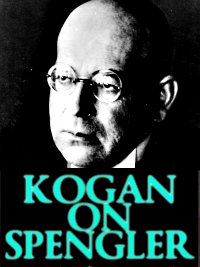
This is Part 2 (A) of "'I See Further Than Others': Reflections On Oswald Spengler's The Decline of the West and The Hour of Decision", a serial essay by Steve Kogan.

Between 1911 and 1914, Spengler’s presentiments of an "approaching World-War" took a historical turn, and he began to see the present crisis as the contemporary form of a recurring phenomenon in the history of other cultures. The prime feature of this ever-recurring catastrophe, as he saw it, was the transformation of an old, form-filled, and soul-expanding culture into a nihilistic and outwardly-expanding empire of a "world-city" civilization, with the world war corresponding to the first phase of "the Classical Age from Cannae to Actium" (216-31 B.C.), as "The later Egyptian historian concealed under the name 'Hyksos period' the same crisis which the Chinese treat under the name 'Period of the Contending States.'" In Spengler's world-picture, this "age-phase" also coincides in the Arabian world with the ascendancy of "Baghdad - a resurrected Ctesiphon, symbol of the downfall of feudal Arabism - and this first world-city of the new Civilization became from 800 to 1050 the theatre of the events which led from Napoleonism to Caesarism, from the Caliphate to the Sultanate." In his introduction, Spengler remarks that above and beyond all the correspondences that were appearing to him "in every increasing volume . . . there stood out the fact that these great groups of morphological relations, each one of which symbolically represents a particular sort of mankind in the whole picture of world-history, are strictly symmetrical in structure." In the third chapter of Volume I, he underscores the complete design of this picture: "Every Culture, every adolescence and maturing and decay of a Culture, every one of its intrinsically necessary stages and periods, has a definite duration, always the same, always recurring with the emphasis of a symbol."   

Volkmar Weiss and the Spenglerian Cycle of History

volkmar_weiss.jpg
Dr. Volkmar Weiss

With the on-going publication by The Brussels Journal of Steve Kogan's overview of Oswald Spengler, it may be relevant to mention the work of a present-day social scientist who has attempted to explain Western civilizational decline from a quasi-Spenglerian perspective. In The Population Cycle Drives Human History—from a Eugenic Phase into a Dysgenc Phase and Collapse (Journal of Social, Political and Economic Studies, Vol. 32, No. 3, Fall 2007) Dr. Volkmar Weiss of the German Central Office for Genealogy in Leipzig writes: “In his book The Decline of the West [Spengler] comprehended the essential elements of the downward spiral in a typological way, without proving his conclusions statistically.” However, “ In order to interpret this behavior and to predict its outcome, we need more insights than the analogies by Spengler of the growth and final decay of all cultures.” Accordingly, Weiss approaches the subject of decline from a bio-genetic perspective using population genetics, IQ, and demographic shifts as explanations.

The Flemish Influence On Henry Hudson

Straat-Davis-en-Hudson.jpg

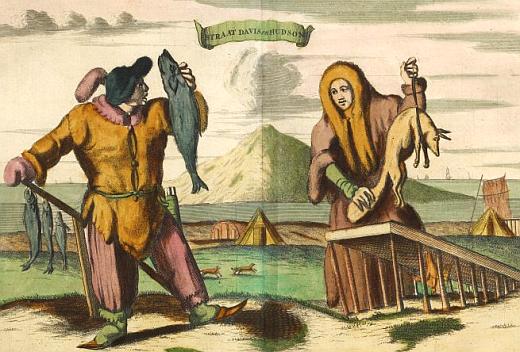
Recently I spotted an article by a Mr. James Kaplan entitled "Henry Hudson: The Failed Entrepeneur Who Founded New York". Mr. Kaplan's article follows the common, albeit mistaken, presumption that Henry Hudson is the underappreciated genius behind the settlement of New York, New Jersey, and Delaware. Further, the article follows contemporary Anglo-American scholarship in ignoring the direct and overwhelming contribution of the Flemish emigres to the conception, financing, and exploitation of Henry Hudson's "discovery" of New York.

When Invention Is The Mother Of The News

This week’s “Duly Noted” concentrates on a single topic: the political situation in Hungary. From the outset, the reader should be aware of a prejudice he might be nurturing in his subconscious. It is that “big things” happen in “big countries”. Indeed, they often do. Size, numbers and statistical probability are the explanation. Even so, small countries, by their size or by the attention one is conditioned to give them, can be places where scientific innovations that change our way of life are hatched. The same is true for public affairs. A case in point is the Magna Charta. Illiterates only doubt its world historical significance. Nevertheless, in 1215 England has been a minor country. Wrongly, no one noticed.

Syndicate content