The End Of Deficit Spending?

In democratic countries, many politicians get themselves elected by making promises for spending programs that the citizens cannot or are unwilling to pay for. The result is persistent deficit spending that ultimately spirals out of control. The good news is that some democratic countries have learned how to avoid the spending/deficit trap, and those countries can serve as examples for the less prudent majority. (See chart below.)

The best example is Switzerland. The Swiss have managed to be fiscally responsible for many decades, in part because they have a highly decentralized, direct democracy. Most governmental functions take place at the local level rather than the federal level in Switzerland, and as a result, the local governments must compete with each other on taxes, regulations, etc., which tends to hold down the growth in government and promotes liberty. 

Surviving Islamism ... And Right/Left Politics: Churchill's Principle - Part VI: Back from the Brink

Churchill's Principle by Peter Carl

In his sixth and final in a series of six essays, Peter Carl offers some practical insights and suggestions as to how the Counter-Jihad Movement and its leaders and supporters can best learn from Winston Churchill’s experiences and successes from World War II. The author concludes that, in light of Islamism’s own well-coordinated international implementation and its deeply local successes across both the West and the remainder of the world, failure on the part of the Counter-Jihad Movement to realize similar levels of effectiveness as those achieved by Islamists will not and can not bode well at all for a vulnerable Movement and the future of the West. Hope, however, may be found, argues Peter Carl, in implementing and pursuing jointly coordinated policies and efforts domestically and internationally within the Counter-Jihad Movement, based upon today’s practicalities and Churchill’s most successful insights and strategies.

How The Debt Crisis Will End

It became increasingly clear this month how the debt crisis will end - and it is not going to be comfortable. 

The latest phony solution is for the large, "responsible" countries to demand more fiscal responsibility from the smaller and purportedly "less responsible" countries. In Europe, Germany's Angela Merkel and France's Nicolas Sarkozy are demanding that other European states give up some of their sovereignty and agree to strict limits on their deficit spending. 

A New "Silent Night" Descends on Austria

Belvedere Palace in Vienna - Picture by Hannah Swithinbank

Ah, to be in Vienna at Yuletide. Streets sparkle with the lights of the Christkindlmarkts, the traditional markets that spring up for the season. Skaters circle the rink outside the picturesque Rathaus (City Hall). Merrymakers warm their hands on cups of gluhwein (mulled wine). What could possibly be missing?

Freedom of speech.

Atonement, Quotas and Self-Destruction

Duly Noted

Looking back, we discover that most societies have at one time disadvantaged some of their constituent groups. This could happen by ignoring them, by denying their potential, or by active discrimination. If discrimination, negative, or positive is proven, then democratic principles demand rectification. 

It is now customary to treat bias, whatever its context, as a crime by the beneficiaries of the slight. Whenever reminders of its avowed principles can alert a democratic society of its failing, a two pronged process is initiated. 

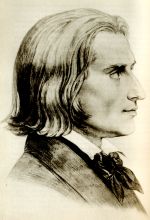
Franz Liszt, God, and Civilization

01LisztAroundAge35.jpg
Liszt around age 35

In Anno Domini 2011 the civilized world celebrates the bicentenary of the composer and performer Franz Liszt (died 1886), piano virtuoso, Nineteenth-Century rock-star equivalent, youthful revolutionary, prodigious lover, Kapellmeister of the Saxe-Weimar Court Theater, father-in-law of Richard Wagner, innovator of the “symphonic poem,” Hungarian nationalist, political reactionary, friend to the Pope, latterly the Abbé Liszt, and the author, in the artistic wake of his son-in-law’s Tristan and Isolde (1854), of two massive oratorios on Catholic themes, The Legend of Saint Elizabeth (1856) and Christus (1866). No composer’s critical status has described such a roller-coaster profile as Liszt’s, whose reputation as a manipulator from the keyboard of audience – and especially of female – emotions early fixed the folkloristic picture of him as an ivory-tickling Svengali whose main talent lay in his ability to dazzle people in the concert hall so as to leave them reeling psychically after the meteoric flash of his manifestation. In the Hungarian Rhapsody No. 2 (1846), for example, Liszt creates a pianistic essay in pseudo-Gypsy musical effects including virtuosic runs, tolling bell-like syncopated passages, and adrenaline-stimulating accelerandi, to the cumulus of which even musically over-sophisticated listeners find it hard not to respond with gooseflesh and voluble hurrahs. Has any other item from the “classical music” repertory inspired two award-winning animated shorts?

Surviving Islamism ... And Right/Left Politics: Churchill's Principle - Part V: Winston’s Wars

Churchill's Principle by Peter Carl

In this, his fifth in a series of six essays, Peter Carl looks at today’s Counter-Jihad Movement in light of one of Churchill’s most ingenious insights. In the years leading up to World War II, Winston Churchill contradicted both his party and generally accepted thinking of his time. Once the war began, looking back to his experiences from World War I and his time as a political outcast, he determined that, in order to succeed against fascist totalitarianism and Hitler’s all-out bid to annihilate Western institutions and freedoms, the dire situation required that all partisan attacks on political ideology – within the context of the war – be fully and indefinitely put aside by all political parties. Victory, in the face of the greatest danger ever seen by the West, Churchill foresaw, would require all parties and their members to voluntarily and consistently adhere to one new common “Ideology” and one new common “Principle” alone. Peter Carl sees here in Britain’s grim situation and Churchill’s ingenious actions clear reference points and requirements if the West is ever to succeed at both turning back Islamization and preventing the rise of truly fascist individuals such as Anders Behring Breivik.

Soothing Lies And Favored Idiocies

Duly Noted

Universally, the public likes soothing interpretations that resolve confusion. The demand is met with the connivance of the manufacturers of fictitious reality. An experience from detention in the Stalin era comes to mind. Once, when a new one “came in” someone called out “give us good news. It does not have to be true”. 

We need to distinguish between several forms of lies. Some are spontaneous and find an eager mass willing to believe and even to invent them. Such is the mediaeval habit to blame the plague on the Jews. Others represent “new truth” in Orwell’s “newspeak” style. These can distract, such as in the case of the Soviet-fed rumor that Hitler is alive. Others might be fables whose acceptance is secured a tyranny. In the early Fifties east Europe’s potato crop failed. The system called the parasite “Colorado Bug” which tied to the “Americans”. As a woman whispered while waiting for rations “if they cannot even overcome their bugs, how will they defeat them in war?” There are also lies that make sense of what is not understood. The role of “international” banks is from this category.

A Brief History Of Liberty for the OWS Crowd

We chose as our point of departure the global protest movement that takes the freedom to forcefully occupy places, including as in London’s landmark St Paul’s Cathedral the freedom to use a place of worship for relieving their bodily urges - on their lips the demand for fairness. Yet looking at this from a different angle, what does this display of impotence by venerated British institutions tell us about the ever lower hanging fruits of liberal societies? The liberties taken by the Occupy Wall Street (OWS) movement are probably not even covered by the four freedoms that in his 1941 address US President Franklin D. Roosevelt recommended that people "everywhere in the world" ought to enjoy: Freedom of Speech, Freedom of worship, Freedom from want and Freedom from fear. So let’s shortly delve deeper in the genius loci of St Paul’s that touches on the history of Western freedom in a particular way.

Suicide By Capitulation

Suicide is as old as man himself. From men falling on their own swords thousands of years ago to the hemlock drinkers in the company of Socrates to those who use guns, pills, and alcohol in the 21st century, suicide though tragic, is nothing new.

And some people will go to great lengths to guarantee their suicide is successful. This has been seen over the last few decades in the United States via the emergence of “suicide by cop” – a phenomenon by which a person who wishes to die pulls a gun (or another weapon) on a law enforcement officer, thus forcing that officer to shoot and kill the attacker.

Syndicate content