America’s Fork In The Road

letter-from-america.jpg

The moment of truth approaches. Obama needs more money urgently. This end of July all the (borrowed) money of the Federal Government is spent. The law sets the debt ceiling at a bit over 14 trillion dollars. Obama is unable to borrow more. He can’t push the US deeper in debt. Very soon, he won’t be able to pay for current expenses. That’s why he’s asking the Congress to raise the debt ceiling with at least two trillion dollars. The Republicans, in control of the House, accept to raise the ceiling under two conditions. First: only if the government is ready to cut spending over the next 10 years with a sum at least equal to the amount of the raise. Second: if taxes are not raised.
Making Crime Pay And The Courage Of Our Convictions

Duly Noted

We like to forget that freedom is not a natural condition nor is it gained or maintained for free.”

Once he got his bearings as an immigrant, this writer developed an interest in what might be ailing Western Civilization. Understandably, at first the modern world’s material fascinations have prevented such a critical question from arising. The successes of the culture and the newly won personal opportunity to enjoy its fruits have initially precluded questions that intended to penetrate the gleaming surface. After all, the achievements have been stunning.

Carl Schmitt And Leo Strauss: Victims Of The Political Concept

carl-schmitt.gif
Carl Schmitt

In keeping with our previous discussions of contemporary European New Right authors, one name often discussed as an ENR influence, the German political theorist Carl Schmitt, can be highlighted. Carl Schmitt (1888-1985) is mostly remembered for his understanding of a political theory grounded in the distinction between a nation and its common enemy, and abstractly, as the perennial friend-enemy dichotomy. For Schmitt, the political (in his sense) was fundamental, and in fact subsumed all other social-cultural manifestations. We encounter his mature thinking principally within the pages of The Concept of the Political (with The Age of Neutralizations and Depoliticizations), and it is probably safe to say that it is both the work most often read as an introduction to his thinking, and the one most often cited in general commentary. The Concept of the Political is a rather brief work, about 80 pages, originally published in 1927, followed in 1932 by an amended second edition, and, in 1933, a third revision. The current American edition from University of Chicago Press includes Leo Strauss' Notes on the Concept of the Political, written in 1932.

Bluntly About NATO

Duly Noted

It follows from the nature of alliances that their evolvement is burdened by tensions. This is especially true of arrangements that bind fully sovereign entities together and whose primary aim is the protection of independence. Accordingly, compared to NATO, the Warsaw Pact had fewer crisis but the ones that broke out –Hungary in 1956, Czechoslovakia in 1968 and Solidarnost - proved explosions. Tito’s break with Moscow does not entirely fit the list, as formally Yugoslavia’s relationship to the USSR has been bilateral. Meanwhile, since 1949, NATO’s internal dissonances were audible while they never led to the deafening rumble of the WP’s dissonances. 

The Returns On The Cuddling of Terrorists

Duly Noted

We like to think that the facts accessible to us determine our measured judgment of the case. Therefore, they become decisive according to a rational evaluation. A praxis related correction of the conception would be to surmise that it is the interpretation of filtered facts that gives them significance. In translation, this means that not the pure event but its agreed upon meaning is what makes it consequential in the public’s mind.  

Bin Laden’s removal is a fact. So are his record and his well-documented and loudly proclaimed intentions. Nevertheless, the results of the commando action that terminated his career prompted a revealing and potentially consequential discussion in Germany. It goes beyond bemoaning that there will be an “empty chair” at the bin Laden family’s dinner table. The unpleasant tendency embedded in Germany’s political culture is to take extreme positions. That even pertains when moderation and restraint are emphasized as “non-negotiable” goals.  

Iraq’s Kristallnacht: 70 Years Later

Seventy years ago, on June 1, 1941, the most dramatic and violent pogrom in the Arab Middle East during World War II took place in the Iraqi capital, Baghdad. Known in Arabic as the Farhūd, this devastating pogrom left approximately 150 Jews dead, hundreds more wounded, and led to the ransacking of nearly 600 Jewish businesses. The grim events of June 1-2, 1941 were the Iraqi Arab equivalent of the mass violence on Kristallnacht, which had taken place some two and a half years earlier across Nazi Germany. The anti-Jewish riots were mainly led by Iraqi soldiers (bitter and frustrated by their defeat at the hands of the British Army), some members of the police and young paramilitary gangs, swiftly followed by an angry Muslim population that went on the rampage in an orgy of murder and rapine.

The Return Of The Age Of Small Countries?

Duly Noted

Visiting Croatia has triggered a perception. The small country which is not a Balkan state, proved to be well managed. The indicators pointing to successful modernization abound. A multitude of peoples, beginning with the ancient Greeks, then the Slavs, the Hungarians, the Muslims and the Venetians all came and are now gone. The edifices of their thriving small states have become eye-catching ruins that lure tourists. 

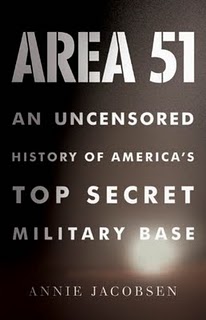
Area 51, Cache Of Cold War Secrets?

Area51-book-cover-annie-jacobsen.jpg

As revelations go, journalist Annie Jacobsen’s new book about Area 51 – An Uncensored History of America’s Top Secret Military Base (Little, Brown 2011) delivers rather less éclat than the publicity for it promises. The book is nevertheless a moderately engaging “read,” whose 384 pages of text prompted this aficionado to devour their reportage in a mere two sittings, one before going to bed, until quite late at night, and the other early the next morning on awakening. The disappointment with which Jacobsen’s opus is likely to leave connoisseurs of its genre stems from its aggressive but peculiar myth-busting character.

A Warning To America

wilders-tennessee-2011-05-13_1635.jpg

Do you know why America is in a better state than Europe? Because you enjoy more freedom than Europeans. And do you know why Americans enjoy more freedom than Europeans? Because you are still allowed to tell the truth. In Europe and Canada people are dragged to court for telling the truth about islam.

I, too, have been dragged to court. I am an elected member of the house of representatives in the Netherlands. I am currently standing in court like a common criminal for saying that islam is a dangerous totalitarian ideology rather than a religion. The court case is still pending, but I risk a jail sentence of 16 months.

Syndicate content