Edgar Rice Burroughs and Masculine Narrative

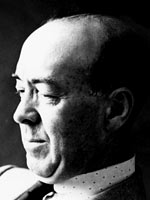
Edgar-Rice-Burroughs.jpg

Contemporary popular culture is as jejune as contemporary politics: strangled by political correctness and by contempt for form and etiquette, it eats away like acid at what remains of courtesy and memory.  But the past of popular culture – in literature and the movies – has much nourishment to offer.  One of the most popular authors of the Twentieth Century, Edgar Rice Burroughs (1875 – 1950), had a keen intuition about the health of the body politic and the positive relation of a vital culture to its founding traditions.  The Author of Tarzan (1912) and its many sequels, the inventor of the extraterrestrial sword-and-sandals romance, ex-cavalryman, admirer of the Apache and the Sioux, anti-Communist, anti-Nazi, self-publishing millionaire entrepreneur, religious skeptic, “Big-Stick” patriot, Southern California real estate baron, sixty-year-old Pacific-Theater war correspondent, Burroughs has, with a few ups and downs, maintained an audience both from his authorial debut in 1912 to the present day, nearly sixty years after his death.  Burroughs has a place in the culture wars, standing as he does for the opposite of almost everything advocated by the elites of the new liberal-totalitarian order.  I offer, in what follows, a modest assessment of Burroughs’ work.

A History of Beer - Part 2

history-of-beer-fjordman.jpg

According to authors J. P. Mallory and D. Q. Adams, the Proto-Indo-European lexicon which has been carefully reconstructed by scholars through generations of comparative linguistics contains words which indicate a diet that included meat, broth, salt, dairy products and the consumption of alcoholic beverages such as beer, mead and possibly wine:

The consumption of milk by adults also has genetic implications in that many people become lactose intolerant after childhood, i.e. become ill when they consume milk. This situation is particularly prevalent in the Mediterranean while lactose tolerance increases as one moves northwards. The ability to consume milk has been seen as a selective advantage among northern Europeans in that it helps replace the necessary quantities of vitamin D which is reduced in regions of poor sunlight. The processing of milk into butter or cheese reduces the ill effects of lactose intolerance. The different alcoholic beverages also merit brief discussion. The word for ‘mead’ (*médhu) is well attested phonologically….There is archaeological evidence for mead from the third millennium BC but it may be considerably older. Beer (*helut) is earliest attested, about the mid fourth millennium BC (Iran and Egypt), but it too may be older. The proliferation of drinking cups that is seen in central and eastern Europe about 3500 BC has been associated with the spread of alcoholic beverages and, possibly, special drinking cults.

<!---->

Is France Doing Better Than The U.S.?

Marseille, France.  Why does it appear France is bouncing back more quickly from the recession than the United States?

France has long been known for having an economy that suffered from too much government interference, too-high taxes and destructive union activity. Yet it grew 1.4 percent in the second quarter of 2009, while the U.S. economy continued to decline.

A History of Beer - Part 1

history-of-beer-fjordman.jpg

As always when writing about a specific topic, I have used a combination of different sources when doing research for this essay, but the single most important source of information was A History of Beer and Brewing by I. Hornsey. His book is perhaps a little bit too much focused on Britain but is overall very comprehensive and well worth reading. It traces the history of brewing from prehistoric times until the turn of the twenty-first century. Another work I found valuable was Richard W. Unger's book Beer in the Middle Ages and the Renaissance. Unger's text contains a little information on brewing-practices in the ancient world and even less of the scientific-industrial brewing that we know after the Industrial Revolution. However, his coverage of the Middle Ages and the early modern period is quite good, and I will quote his work extensively when writing about this period.

Duly Noted: A Hero’s Welcome for the Bad Guy

bj-logo-handlery.gif

George Handlery about the week that was. Getting the unwanted nuke. Right and Left. Illusions about tyrannies. Governing creates enemies. The failing state and society’s reaction. Undermining the global order by ignoring the insanity of leading eccentrics. The Dictator’s Tantrum.
 
1. The good news is that reliable sources (Time has confirmed our own oracles’ finding. It declared that its research seeks energy from fission and not the manufacture of nukes. It is, therefore, of some interest that her government has asked the spiritual leadership for the go-ahead to build a bomb. Whatever the real truth might be, we are not to worry. Ahmadinedjad and cohorts who have recently guaranteed the purity of Iran’s elections will comfort us. Such as with an assurance that, should Iran accidentally stumble into the bomb it is not seeking, she will not use it. Well, at least for the time being. May be.

Obama And The Swedish Welfare State

Stockholm, Sweden.  Do you think America would be better off with a Swedish-type welfare state?

This question tends to evoke strong reactions from both the left and right, yet few understand Sweden's economic history and the revisions it has been making to its welfare-state model in recent years. Sweden was a very poor country for most of the 19th century.  The poverty of those years caused many to emigrate from the country, mostly to the U.S. Upper Midwest.

The Flemish Influence on the American Pilgrims - Part 4

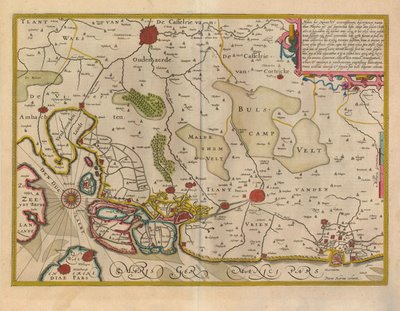
Mercator Flandria Oostende Brugge 1606.jpg

A 1606 reprint of Mercator's map of West Flanders, the source of the spark of the Protestant Dutch Revolt

Recap of Earlier “The Flemish Influence on the Pilgrims” Blog Postings

usa-flanders.gif

In my earlier postings, Part 1, Part 2, & Part 3, we saw that from the time Flemings stormed across the English Channel as the largest component of William the Conqueror’s Invasion Force in 1066 up to the birth of the first Pilgrims in the late 16th century Flemings in the British Isles came, saw, influenced, and assimilated. The steady influx of Flemings to the British Isles in every subsequent century earned for the Flemish William Caxton’s classification by the 16th century as one of the ‘seven races of England’.

Snapshots Of The Continent Entre Deux Guerres: Keyserling’s Europe (1928) And Spengler’s Hour Of Decision (1934)

Swiftly on beginning my graduate-student career in 1984 I observed that people calling themselves intellectuals – the kind of people whom one met in those days as fellows in graduate humanities programs – tended to be obsessed with topicality and immediacy.  Some adhered explicitly to one or another ideology of the a-historical, identifying so strongly with a perceived avant-garde or “cutting edge” that yesterday struck them as contemptible, a thing to be denounced so as to make way for the reformation of existence.  But the majority were (and I suppose are) conformists looking for cues about what effective poses they might strike or words employ to signify their being “with it.”  To be “with it” in a comparative literature program in California in the mid-1980s meant to be conversant with “theory,” and “theory” in turn meant the latest oracular pronouncement by the Francophone philosophe du jour, as issued almost before the writer wrote it by the those beacons of scholastic responsibility, the university presses.  First it was Michel Foucault, then Jacques Derrida, and then Jean-Michel Lyotard.  As tomorrow swiftly became yesterday, one sensed a panic to keep up with the horizonless succession of “with-it” gurus in fear that one might appear to others, better informed, as clownishly derrière-garde.

From Meccania to Atlantis - Part 12 ½ (2): Central Central Europe

Yoozio and Goodzio

meccainia-atlantis-logo.jpg

Yoozio is the phonetic spelling of Józio, one of the diminutives of the Polish name Józef (Joseph). One must have earned a special affection to be promoted from the diminutive “Józek” to “Józio,” just as one does who is promoted from Joe to Joey.

Still in a café at the Market Square in Wrocław, I open my newly purchased books, to take a peak into the mind of a man as great and luminous as his close friend, Karol Wojtyła (aka John Paul II) was. Józef Tischner -- Catholic priest, initial and providential pastor to the Solidarity insurrection, man of the people, highlander fond of his Góral folk culture, mountaineer, nature lover, social drinker, indefatigable teller of risqué jokes, resolutely celibate male whom women found irresistibly attractive, Doctor of Philosophy, friend of the brightest European minds of his generation, Dean of the Papal Academy of Theology and professor at the Jagiellonian University (est. 1364) in Kraków, prolific author – and “Yoozio” to his friends, particularly the shepherds among them.  

But who is Goodzio?

Duly Noted: Ransom For Careless Citizens

bj-logo-handlery.gif

George Handlery about the week that was. Create equality: Shall theory or experience count? Conservatives are for structured change. History‘s lesson: what not to do. Pay ransom for careless citizens? Why some hate what they emulate.

1. North Korea has returned the journalists it had captured, tried and duly condemned. A group of climbers is held by Iran. In both cases, regardless of the sympathies for the pawns, raised eyebrows are provoked. Westerners tend to get in harms way. It is the result of mindlessly exposing themselves to the danger that is inherent in getting physically too close to radical tyrannies. To their advantage, the evil of such systems is dangerously under estimated. This inclination of arrogant innocents to provoke trouble suggests that the ones who stumble into traps  set for them do not understand the nature of the systems to which they expose themselves. Most conveniently, for politically uneducated Westerners the last dangerous totalitarian was the National Socialist Hitler they downgrade as „Fascist“. This not only exonerates Stalin -and thereby existing systems with a connection to his- but also reduces the wariness that is due to existing radical totalitarian regimes.

Syndicate content